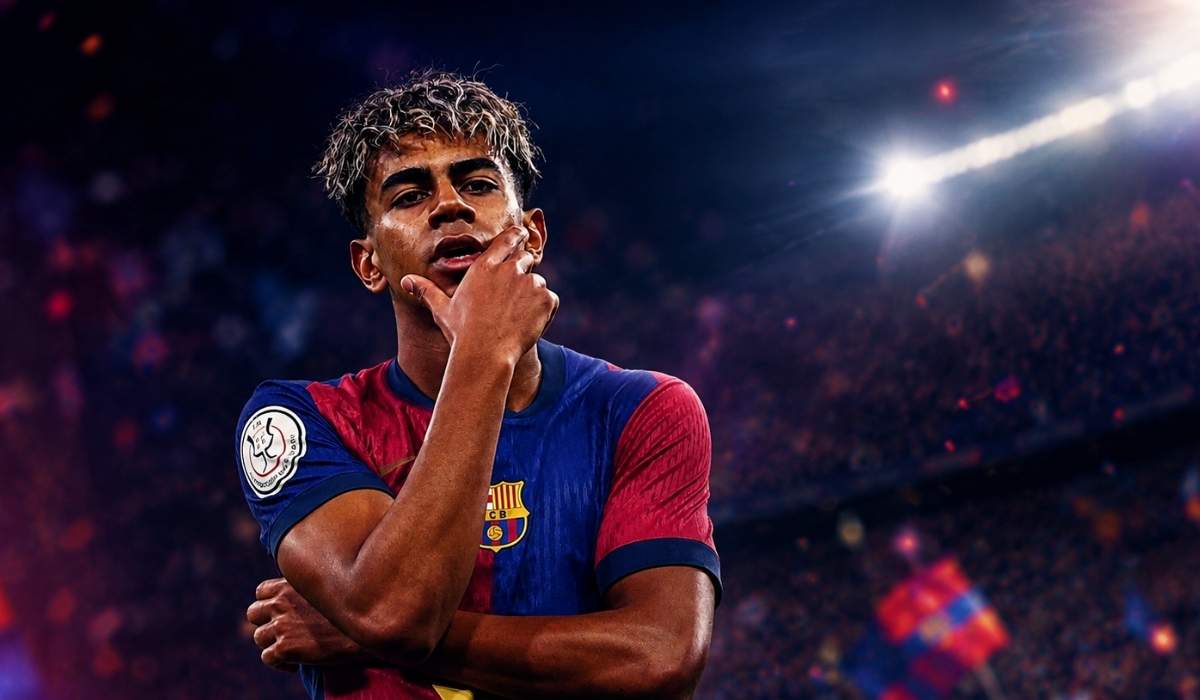
Lamine Yamal has once again attracted attention away from the football pitch after appearing with a custom chain inspired by his famous “304” celebration.
The young Barcelona star has regularly used the number 304 as a tribute to Rocafonda, the neighbourhood in Mataró where he grew up. The number comes from the final three digits of the area’s postal code, 08304. Whenever Yamal performs the gesture after scoring, he is reminding the world where his journey began.
However, the appearance of a custom piece of jewellery based on the symbol has created a new discussion among football supporters.
Some fans believe the chain is a meaningful celebration of Yamal’s identity and success. Others think the teenager may be turning a personal tribute into an increasingly commercial image.
That raises a controversial question: has Lamine Yamal taken the “304” celebration too far?
What Does Lamine Yamal’s ‘304’ Celebration Mean?
To understand the reaction to the chain, it is important to understand what “304” means to Lamine Yamal.
Yamal grew up in Rocafonda, a working-class neighbourhood located in Mataró, near Barcelona. Its postal code is 08304, and the final three numbers became part of his goal celebration.
After scoring, Yamal often forms the numbers three, zero and four using his fingers. It is not a random gesture created for social media. It represents his childhood, his family, his community and the place that helped shape him.
Many footballers celebrate their origins after becoming successful. Some point toward the sky, kiss a tattoo, display a message or perform a gesture connected to their hometown.
For Yamal, the “304” has become his personal signature.
The celebration has also brought international attention to Rocafonda. Football fans who had never heard of the neighbourhood now recognise its postal code because of one of the sport’s most exciting young talents.
For residents of the area, that visibility can be a source of enormous pride. Yamal is showing young people from similar communities that their backgrounds do not have to limit their ambitions.
However, as Yamal’s fame has grown, the “304” symbol has become more than a goal celebration.
It is now closely connected to his public image.
The Custom Chain That Started the Debate
Yamal recently appeared wearing a custom chain inspired by the “304” celebration. The jewellery immediately attracted attention across football pages and social-media platforms.
For many fans, it was simply another example of a successful footballer enjoying luxury fashion.
Expensive chains, watches, cars and designer clothing are common among elite athletes. Football stars earn significant salaries and often become global fashion figures as their careers develop.
Yamal is therefore not doing something completely unusual.
However, his age and level of fame make almost everything he does more noticeable. He became a major Barcelona player while still a teenager and quickly developed into one of the most discussed footballers in the world.
Every outfit, celebration and social-media appearance can become a headline.
The custom chain therefore raised questions that may not have been asked if an older player had worn the same piece.
Some people admired the design and described it as a powerful representation of Yamal’s roots. Others criticised it as excessive, unnecessary or another sign that the young player is becoming too focused on celebrity culture.
Has the Celebration Become a Brand?
The biggest concern among critics is not necessarily the chain itself. It is the possibility that “304” is gradually becoming a commercial brand rather than remaining a personal tribute.
Modern footballers are more than athletes. The most famous players become global businesses with sponsorship agreements, clothing collections, logos, social-media teams and personal merchandise.
Cristiano Ronaldo turned “CR7” into an internationally recognised brand. Lionel Messi has appeared in campaigns for some of the world’s largest companies. Neymar developed an image combining football, fashion, music and entertainment.
Yamal may be following a similar path.
The number “304” is memorable, visually simple and closely associated with his story. From a marketing perspective, it has all the qualities needed to become a successful personal symbol.
That is not automatically negative.
A player can honour his community while also developing a commercial identity. The two ideas do not have to contradict each other.
The problem would arise if the commercial side began to overshadow the original meaning. Supporters may start viewing “304” as a logo designed to sell products rather than a genuine tribute to Rocafonda.
At the moment, that judgment may be premature. Wearing one custom chain does not prove that Yamal has abandoned the celebration’s meaning.
Nevertheless, the debate shows how quickly a meaningful symbol can become part of celebrity marketing.
Why Some Fans Think Yamal Has Gone Too Far
One reason for the criticism is the increasing pressure surrounding Yamal’s lifestyle.
Young footballers are often expected to behave differently from established stars. Supporters want them to remain humble, focused and disciplined while developing their careers.
When a teenager begins displaying luxury jewellery, expensive clothing or celebrity connections, some fans immediately worry that fame is becoming a distraction.
Football history contains several examples of talented young players who struggled after receiving too much attention too early. Success brought money, pressure and public recognition before they had enough experience to manage it.
Critics may therefore see Yamal’s chain as a warning sign rather than an isolated fashion choice.
They may ask whether he is becoming too interested in his image, whether the people around him are protecting him properly and whether commercial opportunities could affect his development.
There is also a wider debate about football culture.
Some supporters believe players should express themselves freely and enjoy the rewards of their success. Others prefer footballers to maintain a more traditional and modest public image.
The chain sits directly in the middle of that disagreement.
To one group, it represents confidence and cultural pride. To another, it represents unnecessary luxury and growing arrogance.
Is the Criticism Fair?
It is important to consider whether the reaction is fair to Yamal.
He is a professional footballer competing at the highest level, but he is also a young person experiencing extraordinary success.
Most teenagers are able to experiment with fashion, make mistakes and develop their identity without millions of strangers analysing every decision.
Yamal does not have that freedom.
A photograph of him wearing a chain can lead to thousands of comments about his character, discipline and future. People who have never met him may decide that he is humble, arrogant, focused or distracted based on a single image.
That level of judgment can be excessive.
There is currently no clear reason to believe that wearing a custom chain has damaged his football performance. A player can enjoy fashion and still train seriously, respect his teammates and perform consistently.
Luxury jewellery does not automatically indicate a poor attitude.
The more reasonable approach is to judge Yamal primarily by his behaviour within the team and his commitment on the pitch.
Should his performances decline while off-field controversies increase, concerns would become more understandable. But criticising him only because he wore jewellery inspired by his own celebration may be an overreaction.
A Symbol of Pride Rather Than Arrogance
The chain can also be understood positively.
Instead of choosing a random design, Yamal selected something connected to his hometown. Even while enjoying international success, he continues to display the identity of Rocafonda.
That matters because professional football often separates players from the communities where they began.
Once young athletes become wealthy and famous, they move into different environments and gain access to lifestyles that are far removed from their childhood experiences.
Yamal’s continued use of “304” suggests that he does not want people to forget his story.
Every time the symbol appears, Rocafonda receives global attention. The community becomes part of the journey of a Barcelona and Spain star.
The custom chain could therefore represent loyalty rather than arrogance.
It transforms his goal celebration into something he can carry with him beyond the pitch. In that interpretation, the jewellery is not about showing wealth. It is about keeping his origins physically close.
The Pressure of Being Football’s Next Superstar
The reaction also reveals how much pressure has already been placed on Yamal.
He is regularly compared with established legends despite being at the beginning of his senior career. Every strong performance increases expectations, while every mistake creates criticism.
Barcelona supporters see him as one of the club’s most important players. Spain supporters expect him to influence major international competitions. Sponsors and media companies recognise his enormous commercial potential.
That creates a dangerous situation.
Yamal must develop as a footballer while simultaneously learning how to manage fame, wealth and global attention.
Older stars usually build their public image gradually. Yamal entered the spotlight at an unusually young age and has had little time to adjust.
The “304” symbol gives him something authentic around which to build that image. Rather than copying another player’s style, he has created a celebration based on his own background.
The challenge is maintaining that authenticity as commercial interest grows.
Football and Fashion Are Now Closely Connected
The chain should also be viewed within the wider relationship between football and fashion.
Modern footballers frequently attend fashion shows, collaborate with designers and appear in lifestyle campaigns. Their influence extends far beyond stadiums.
Social media has accelerated this change. Players can display their personalities directly to millions of followers without depending entirely on traditional interviews.
Clothing and jewellery have become forms of personal communication.
A custom chain allows Yamal to present himself as confident, fashionable and connected to his origins. Whether fans like that image or not, it reflects the modern sporting environment.
Footballers are no longer expected to disappear from public view after matches. Their fashion, travel and entertainment choices are part of the content surrounding the sport.
This makes criticism almost unavoidable.
A player who wears simple clothing may be described as boring. A player who wears expensive jewellery may be called arrogant. A player who avoids social media may appear distant, while someone who posts frequently may be accused of seeking attention.
Yamal will have to learn that there is no public image capable of satisfying everyone.
Could the ‘304’ Symbol Inspire Young People?
The “304” story has the potential to be more influential than a normal football celebration.
Young people from Rocafonda and similar neighbourhoods can see part of their own identity represented on the biggest stages in football.
Yamal’s journey demonstrates that world-class talent can emerge from communities that are often ignored or negatively portrayed.
When he performs the celebration, he communicates a simple message: success does not require forgetting where you came from.
The custom chain extends that message beyond matchdays.
Of course, the luxury aspect may make the symbol feel less relatable to some supporters. Most young fans cannot purchase expensive custom jewellery.
However, the value of the story is not found in the cost of the chain. It comes from the meaning of the numbers.
A young person does not need to copy the jewellery to understand the message. The larger lesson is to remain proud of one’s background while pursuing bigger opportunities.
What Yamal Must Be Careful About
Although the criticism may be excessive, Yamal still needs to manage his public image carefully.
He represents Barcelona, Spain, his sponsors and a growing global audience. His actions will continue receiving more attention as his fame increases.
The people around him have an important responsibility. Family members, advisers and club officials should help him separate meaningful opportunities from distractions.
A strong support system can allow him to enjoy his success without losing focus.
Yamal should also remember that public symbols create expectations. By making “304” central to his identity, he is presenting himself as a representative of Rocafonda.
That makes authenticity important.
Fans will want to see his connection to the community expressed through more than fashion. Supporting local projects, encouraging young players or contributing to community development would strengthen the symbol’s positive meaning.
The celebration should remain connected to real pride rather than becoming only a commercial slogan.
Has Lamine Yamal Taken It Too Far?
The custom “304” chain is bold, expensive-looking and designed to attract attention. It is understandable that some fans consider it excessive.
However, saying that Yamal has taken the celebration too far may be unfair.
The symbol represents his neighbourhood and personal journey. Turning it into jewellery does not erase that meaning. It may simply be another way for him to express pride in his origins.
The real concern should not be whether a young footballer wears a chain. It should be whether fame begins affecting his attitude, discipline and performances.
So far, a piece of jewellery alone is not enough evidence to reach that conclusion.
The discussion tells us more about the expectations placed on young stars than it does about Yamal himself. Fans want him to become one of football’s greatest players, and that hope creates fear whenever he appears connected to celebrity culture.
Final Verdict
Lamine Yamal’s custom “304” chain has divided opinion, but it should not automatically be treated as a negative development.
For critics, it may look like an unnecessary display of wealth or an attempt to turn a meaningful celebration into a commercial brand.
For supporters, it represents pride, loyalty and the extraordinary journey from Rocafonda to the highest level of football.
Both interpretations are understandable.
The symbol will remain powerful only as long as Yamal stays connected to its original meaning. If “304” continues to represent his family, neighbourhood and beginnings, the chain can be viewed as another tribute to his identity.
However, if the symbol becomes dominated by marketing and luxury, some fans may begin to question whether its original message has been lost.
For now, the chain has created headlines, but the most important story remains what Yamal does on the pitch.
His talent made the world notice him. His choices, performances and character will determine how the world remembers him.
So, has Lamine Yamal taken the “304” celebration too far?
Probably not—but as his fame continues to grow, protecting the true meaning behind the symbol may become more difficult.