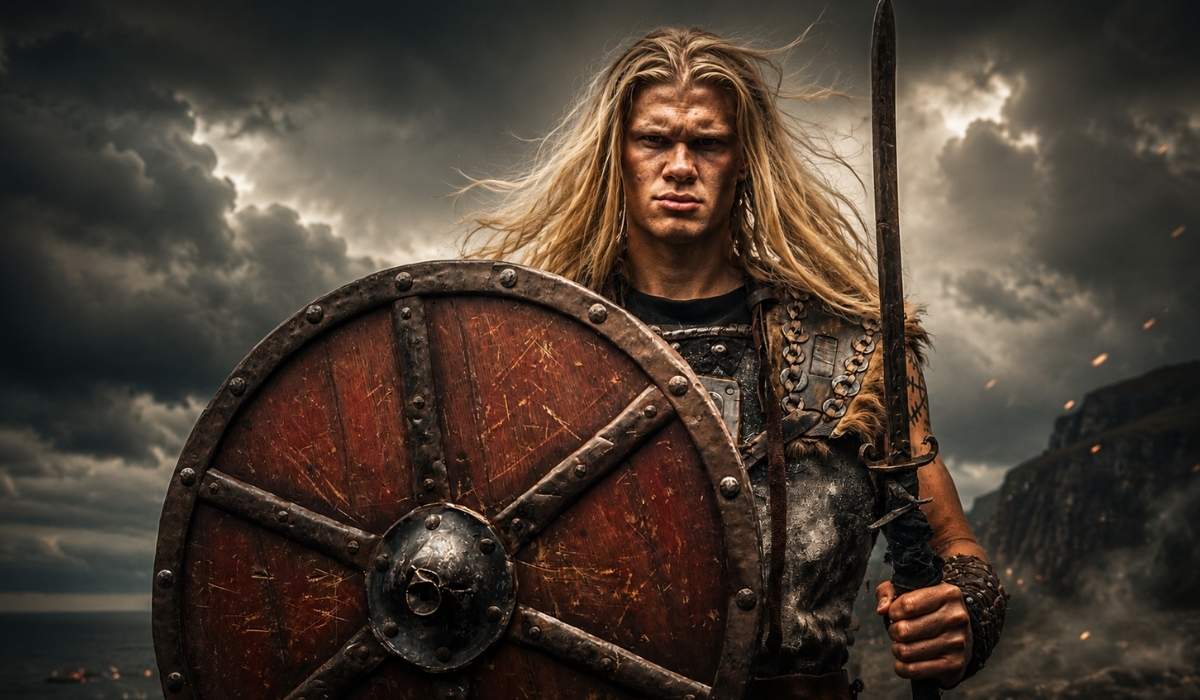
Erling Haaland has traded his football kit for Viking armour—or at least that is what Norway’s extraordinary World Cup photoshoot makes it look like.
Ahead of the Norwegian national team’s journey to the United States for the 2026 FIFA World Cup, Haaland and his international teammates participated in a dramatic Viking-themed campaign. The players appeared dressed as Norse warriors, surrounded by shields, weapons, traditional boats and the spectacular Norwegian landscape.
The photographs immediately captured the attention of football supporters around the world. Haaland already possesses the height, strength and appearance that have caused fans to compare him to a Viking for years. Seeing the Manchester City striker dressed as a warrior therefore felt surprisingly natural.
But the images also inspired a playful question:
Has Erling Haaland abandoned football to become a Viking?
Fortunately for Manchester City and Norway supporters, the answer is no. Haaland has not retired, changed careers or walked away from football. The photoshoot was designed to celebrate Norway’s national identity and build excitement before the country’s long-awaited return to the World Cup.
However, the campaign has achieved exactly what good marketing is supposed to achieve. It has made people stop, look and talk.
Why Was Haaland Dressed as a Viking?
The Viking theme was selected because of Norway’s strong historical connection to Norse culture.
Vikings are commonly associated with exploration, courage, strength and a willingness to face difficult challenges. Those qualities fit perfectly with the image Norway wants to project before competing on football’s biggest stage.
The national team are not travelling to the World Cup simply to enjoy the experience. They want to arrive as serious competitors who are ready to challenge established football nations.
Haaland stands at the centre of that ambition.
He is physically powerful, direct and fearless in front of goal. His playing style often looks like an unstoppable attack on the opposition’s defence. Once he begins running toward the penalty area, defenders can struggle to match his speed and strength.
This is why the Viking comparison works so well.
The campaign does not require supporters to imagine Haaland as something completely different. It exaggerates characteristics that football fans already associate with him.
Place Haaland in armour, give him a shield and position him within a dramatic Norwegian landscape, and the image almost explains itself.
Norway Is Returning After a Long Absence
The photoshoot carries greater meaning because the 2026 World Cup represents a major moment for Norwegian football.
Norway had waited 28 years to return to the men’s FIFA World Cup. Their previous appearance came in 1998, long before Haaland and several of his current teammates became professional footballers.
A generation of Norwegian supporters grew up without seeing their country compete in the tournament.
The national team produced talented players during that period but repeatedly failed to qualify for the largest international competitions. Even when supporters believed a breakthrough was coming, qualification campaigns often ended in frustration.
That changed with the current generation.
Norway now possess several players competing at the highest levels of European football. Haaland is the biggest name, while Martin Ødegaard provides creativity and leadership in midfield. Other talented players have also helped create a more balanced and dangerous team.
Their qualification was therefore more than a sporting achievement. It felt like the end of a long period of disappointment.
The Viking photoshoot celebrates that return with confidence. Instead of quietly entering the tournament, Norway have announced themselves with a campaign designed to make an international impact.
The message is clear: Norway are coming.
Haaland Is Not Abandoning Football
The dramatic appearance of the campaign could easily produce misleading social-media headlines.
“Erling Haaland Abandons Football.”
“Haaland Reveals His New Career.”
“Manchester City Star Becomes a Viking.”
These headlines are entertaining because they create curiosity, but they should not be interpreted literally.
Haaland remains a footballer and one of the most important players in the Norwegian national team. The costume is part of a creative promotional campaign rather than evidence of a career change.
The photoshoot allows him to have fun with the public image that has followed him throughout his career.
Fans have long described Haaland as a Viking because of his Norwegian background, powerful body, long blond hair and aggressive goalscoring style. He has sometimes embraced that comparison through photographs, celebrations and public appearances.
The World Cup campaign takes the idea to its most dramatic level.
Rather than avoiding the nickname, Haaland and Norway have transformed it into a national marketing strategy.
Why Haaland Looks Perfect as a Viking
Some promotional concepts feel forced because the person involved does not naturally fit the theme. That is not a problem in Haaland’s case.
At approximately 1.95 metres tall, he has the physical presence of a warrior. His speed and strength make him difficult to stop, while his facial expressions during matches often communicate complete determination.
He also plays football in a direct and ruthless way.
Haaland is not normally a striker who spends an entire game attempting unnecessary tricks. His greatest strength is his ability to identify the fastest path toward goal.
He attacks space, overwhelms defenders and finishes chances with remarkable efficiency.
That style matches the Viking image of a warrior moving forward without fear.
His appearance also contributes to the comparison. Haaland’s blond hair, broad frame and Scandinavian identity have encouraged fans to make Viking jokes since his early career.
The national team’s campaign therefore feels like an acknowledgement of a popular football image.
Haaland did not suddenly become a Viking for the photoshoot. The football world had already been presenting him as one for years.
More Than Just a Funny Photoshoot
Although the campaign is visually entertaining, it also serves an important purpose.
International teams compete for attention before major tournaments. Every country releases squad announcements, promotional videos, official photographs and new kits.
Most of that content disappears quickly because supporters see similar campaigns from dozens of teams.
Norway needed something distinctive.
The Viking concept connects directly to the country’s identity while presenting its players as powerful and fearless. It also creates images that are easy to share across social media.
Someone who knows little about Norwegian football can still understand the message. The players are warriors preparing for battle, and the World Cup is the challenge waiting for them.
This makes the campaign useful beyond Norway’s existing supporters.
It introduces the team to a global audience and gives neutral fans a reason to pay attention.
Football marketing is most successful when it combines sport, culture and storytelling. Norway’s Viking photoshoot attempts to achieve all three.
The Pressure on Haaland at the World Cup
The campaign may look playful, but Haaland will face serious pressure once the tournament begins.
He is expected to lead Norway’s attack and provide the goals required to compete against strong opponents. As the team’s most recognised player, he will receive more attention than any of his teammates.
Every performance will be analysed.
If Haaland scores important goals, he will be celebrated as the Viking warrior who carried Norway forward. If he struggles, critics may argue that the promotional campaign created more excitement than the team could support.
This is the challenge of being a global superstar.
Haaland cannot participate in a dramatic campaign without accepting that it will increase expectations. The photographs present him as powerful, fearless and ready for battle. Supporters will expect him to display those same qualities on the pitch.
Fortunately, Haaland has spent much of his career performing under pressure.
He has scored regularly in domestic leagues, European competitions and international matches. Defenders know what he wants to do, but preventing him from doing it remains extremely difficult.
The World Cup now offers him a new stage.
Can Haaland Carry Norway?
Football is a team sport, and Norway cannot depend entirely on one player. Haaland will need support from the midfield, wide players and defence if the country hopes to progress.
However, having an elite goalscorer can transform a team’s possibilities.
World Cup matches are often decided by very small moments. A team may create only one or two clear chances against a strong opponent. A striker who can convert those opportunities becomes extremely valuable.
Haaland does not need Norway to dominate every match. He needs the team to provide him with the right passes at the right moments.
His movement can also create opportunities for others.
Defenders naturally focus on him because leaving Haaland unmarked is extremely dangerous. That attention can open spaces for teammates arriving from midfield or attacking from wide areas.
Norway’s challenge will be to build a system that maximises his influence without becoming predictable.
Opponents will prepare specifically to stop him. Some teams may defend deeper to reduce the space behind their defensive line. Others may surround him with multiple players and attempt to prevent passes from reaching him.
Haaland must therefore demonstrate more than physical strength. He will need patience, intelligent movement and strong coordination with his teammates.
The Viking Image Could Motivate Norway
National teams often search for a shared identity before major tournaments.
Some teams focus on technical ability. Others present themselves as underdogs, champions or representatives of a proud football tradition.
Norway’s campaign gives the players a clear symbol: they are modern warriors carrying their country into international competition.
The Viking theme may help create a sense of unity.
Players come from different clubs, leagues and personal backgrounds. During the World Cup, they must quickly become one team with one purpose.
A powerful shared image can contribute to that process.
Of course, costumes and photographs cannot win matches. Tactical preparation, fitness and performance remain far more important.
But confidence matters in tournament football.
Norway have spent decades outside the World Cup. They could arrive feeling grateful simply to participate, or they could arrive believing they belong among the strongest nations.
The campaign clearly promotes the second attitude.
Did Norway Take the Theme Too Far?
Not everyone has responded positively to the Viking concept.
Some critics have questioned whether it relies too heavily on aggressive or stereotypical images. Others have raised concerns about the way Viking symbols can be interpreted in modern political and cultural discussions.
These debates demonstrate that historical imagery is rarely simple.
For many people, Vikings represent exploration, courage and an important part of Scandinavian history. For others, the imagery can suggest violence, conquest or exclusion.
The Norwegian campaign appears intended as a dramatic celebration of heritage rather than a political statement.
However, once content is released publicly, creators cannot completely control how audiences interpret it.
This controversy may actually increase the campaign’s visibility. Positive reactions and criticism both cause people to share and discuss the photographs.
From a marketing perspective, the campaign has already succeeded in generating attention.
The more important question is whether the attention supports the team or becomes an unnecessary distraction.
A Perfect Social-Media Moment
The images are designed for the modern football audience.
They are dramatic, recognisable and easy to understand within seconds. Haaland’s presence immediately attracts attention, while the Viking clothing creates surprise.
That combination is ideal for social media.
A normal squad photograph might receive attention from dedicated Norway supporters. Haaland dressed as a Viking can reach football fans across the world.
The campaign also creates opportunities for jokes, memes and clickbait headlines.
Fans can ask whether Haaland has abandoned football, joined a Viking army or prepared to conquer the United States. These questions are obviously exaggerated, but they encourage people to open the story and discover the real reason behind the photoshoot.
The key is making sure the article eventually provides accurate information.
Creative headlines can attract attention without permanently misleading the audience.
Has Haaland Found His Second Career?
Haaland certainly looks comfortable in the Viking role.
His appearance is convincing enough that fans may joke about him pursuing acting after football. That possibility is especially amusing because his public image already extends beyond the pitch.
He has appeared in advertising campaigns, entertainment content and other creative projects. His personality combines serious sporting ambition with a willingness to participate in unusual visual ideas.
Still, football remains his main career.
At 25, he should have many important seasons ahead of him. His goalscoring records and performances suggest that he will remain central to both Manchester City and Norway.
The Viking photoshoot is not the beginning of a career change. It is another chapter in the development of Haaland as a global football personality.
Final Verdict
So, has Erling Haaland abandoned football to become a Viking?
Absolutely not.
He and his Norwegian teammates participated in a Viking-themed photoshoot to celebrate their national heritage and promote Norway’s return to the FIFA World Cup.
The dramatic images present the players as warriors preparing for their journey to the United States. Haaland naturally became the centre of attention because his appearance, strength and playing style already match the popular Viking comparison.
The campaign is bold, unusual and designed to generate conversation.
Some supporters have praised its creativity, while critics have questioned its imagery. Whatever the reaction, Norway have ensured that their World Cup arrival will not go unnoticed.
Haaland may not be exchanging football boots for Viking armour permanently, but he will be expected to bring the same warrior mentality onto the pitch.
The costumes will soon be removed. The shields and weapons will return to the photographers.
Then the real battle will begin.