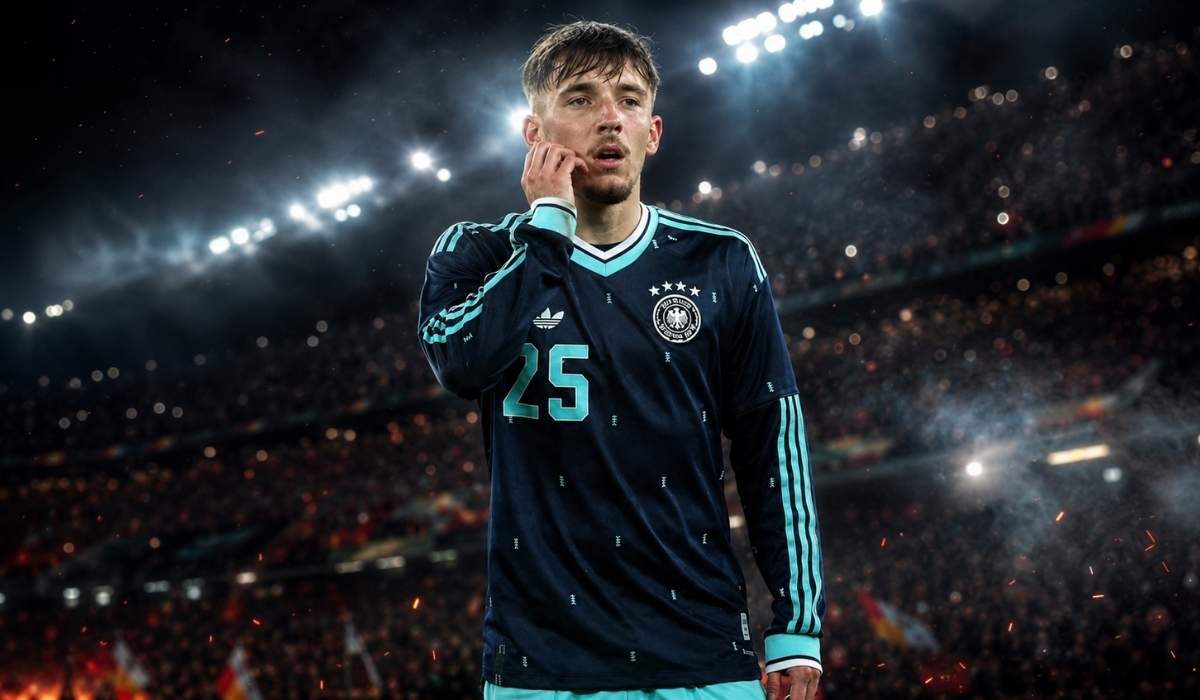
Lennart Karl was preparing for what could have been one of the most exciting moments of his young football career. The Bayern Munich teenager had earned a place in Germany’s squad for the 2026 FIFA World Cup and was ready to represent his country on the biggest stage in international football.
However, his dream has now been cruelly interrupted.
Karl has been ruled out of the tournament after suffering a serious muscle injury in his left thigh during Germany’s preparations in Chicago. The setback occurred shortly before the beginning of the World Cup, leaving the 18-year-old without enough time to recover.
Germany have responded by calling up RB Leipzig midfielder Assan Ouédraogo as his replacement.
For Karl, the timing could hardly have been worse. He had worked his way into the national-team picture after an impressive breakthrough period with Bayern. The World Cup offered him an opportunity to introduce himself to millions of football supporters and potentially become one of Germany’s surprise performers.
Instead, he will now have to watch the tournament from the sidelines.
So, is Lennart Karl’s World Cup dream over? For 2026, sadly, the answer is yes. But this painful setback does not have to define the rest of his career.
What Happened to Lennart Karl?
Karl suffered the injury during a Germany training session in Chicago as the squad prepared for a friendly against the United States.
The initial reaction from the German camp suggested that the problem could be serious. Karl was taken for medical examinations, and the results later confirmed a muscle-bundle tear in his left thigh.
A muscle injury of this nature requires proper recovery and rehabilitation. Even if the player begins feeling better after a short period, returning too quickly could make the injury worse and lead to a longer absence.
With the World Cup beginning only days later, Germany had no realistic choice but to remove Karl from the squad.
The national team could not keep a valuable squad place open for a player who would be unavailable for an uncertain period. Tournament football also demands a high level of physical readiness because matches arrive quickly and recovery time is limited.
Karl’s withdrawal therefore became unavoidable.
For a young player who had been preparing for the biggest tournament of his life, the diagnosis must have been devastating.
A World Cup Opportunity Lost
Playing at a World Cup is the dream of almost every professional footballer.
Some outstanding players complete long careers without ever qualifying for the tournament. Others reach the World Cup but do not receive an opportunity to play.
Karl had achieved something remarkable by earning selection while still only 18 years old.
He was not expected to carry Germany’s entire attacking responsibility. However, he could have been used as an energetic substitute or a creative option against tiring defenders.
Young players sometimes become unexpected heroes during major tournaments because opponents know less about them. Their confidence, freedom and willingness to take risks can provide something different from more experienced teammates.
Karl appeared capable of filling that role.
His pace, creativity and attacking confidence had already impressed Germany coach Julian Nagelsmann. The tournament could have accelerated his development and given him valuable experience alongside established international players.
That opportunity has now disappeared, at least for this summer.
The injury is especially painful because it did not happen during a competitive World Cup match. It occurred in training before Karl could even make his tournament debut.
Why Karl Was Important to Germany
Germany possess several experienced and talented players, but Karl offered qualities that could have made him useful during the tournament.
He plays with confidence and is willing to attack defenders directly. His movement, technical ability and speed allow him to contribute in different attacking areas.
Tournament squads need variety.
A coach may begin a match with experienced players but later require someone capable of changing its rhythm. Karl could have entered during the second half and brought fresh energy against opponents who had already been defending for an hour.
His age could also have worked in his favour.
Young players sometimes perform with less fear because they are not carrying years of disappointment or public criticism. They see the opportunity rather than the pressure.
Germany have experienced difficult World Cup campaigns in recent years, including early eliminations in 2018 and 2022. Bringing talented young players into the squad represented part of the country’s attempt to build a new and more confident team.
Karl was one of the symbols of that new generation.
His absence does not destroy Germany’s tournament hopes, but it removes an exciting option from Nagelsmann’s squad.
A Cruel Moment After His Bayern Breakthrough
Karl’s injury feels even more disappointing because it followed an impressive breakthrough at Bayern Munich.
Breaking into Bayern’s senior team is extremely difficult. The club regularly competes for domestic and European trophies and usually contains experienced international players in every position.
A teenager must demonstrate exceptional talent and maturity to earn regular opportunities.
Karl had begun doing exactly that.
His performances made him one of the most discussed young players in German football. Supporters saw him as another promising academy talent capable of establishing himself at the highest level.
A World Cup appearance would have continued that remarkable rise.
Strong performances for Germany could have increased his confidence, reputation and importance at Bayern. He would also have returned to his club with experience of playing under enormous international pressure.
Instead, Karl must now concentrate on rehabilitation.
That may feel like a major step backward, but injuries are an unfortunate part of professional football. How a young player responds can become just as important as the setback itself.
Julian Nagelsmann’s Reaction
Germany coach Julian Nagelsmann expressed sympathy for Karl after the injury was confirmed.
The coach recognised how painful the situation must be for a teenager who had worked so hard to reach the tournament.
Nagelsmann had selected Karl because he believed the youngster could contribute. His comments about the player’s creativity, speed and personality showed that Karl was not included only for experience.
Germany genuinely planned to use his qualities.
That makes the withdrawal more significant.
The coaching staff must now adjust its plans without one of the squad’s most unpredictable attacking players. Nagelsmann must also help the rest of the team remain focused despite seeing a young teammate lose his World Cup opportunity so suddenly.
Injuries before major tournaments affect more than the player involved. They can influence the mood of the entire squad.
Karl’s teammates will likely want to support him and may even use his disappointment as additional motivation during the competition.
Assan Ouédraogo Receives the Call
Karl’s heartbreak has created an unexpected opportunity for Assan Ouédraogo.
The RB Leipzig midfielder has been selected to take Karl’s place in Germany’s World Cup squad.
For Ouédraogo, the call represents the fulfilment of a major career ambition. He had narrowly missed the original selection but remained close enough to the national-team plans to be chosen when a replacement became necessary.
He is not an identical replacement for Karl.
Every player offers a different combination of qualities, and Nagelsmann may adjust his tactical plans accordingly. However, Ouédraogo is another highly rated young German talent with the confidence and ability to contribute.
His selection also demonstrates the depth of Germany’s emerging generation.
Losing a promising Bayern player is painful, but the team can respond by bringing in another young midfielder from a major Bundesliga club.
Ouédraogo will now need to adapt quickly.
He is joining the squad shortly before the tournament and must understand Germany’s tactical instructions, training routines and match preparations. There will be little time for a gradual introduction.
At the same time, the unexpected nature of the opportunity may allow him to play with freedom. He was not expected to be at the World Cup, so every minute he receives can be viewed as a bonus.
One Player’s Heartbreak Is Another Player’s Opportunity
The situation demonstrates one of the harshest realities of professional football.
Karl loses a dream because of an injury, while Ouédraogo receives the biggest opportunity of his career.
Neither player caused the situation.
Karl did nothing wrong, and Ouédraogo should not feel guilty for accepting the call. Germany needed a replacement, and he had earned consideration through his performances.
However, the contrast remains emotional.
While Ouédraogo prepares to travel with the national team, Karl begins treatment and watches the tournament opportunity disappear.
Football regularly creates these difficult moments. Squad selections, injuries and suspensions can completely change a player’s career within hours.
Ouédraogo must now honour the opportunity by preparing seriously and helping the team. Karl, meanwhile, must focus on returning stronger rather than wondering what might have happened.
Could Karl Have Been Germany’s Surprise Star?
Before the injury, Karl had the potential to become one of Germany’s surprise World Cup stories.
Major tournaments often introduce young players to a global audience.
A teenager may begin as a substitute, produce one decisive moment and suddenly become internationally recognised. One goal or assist in an important knockout match can change a young player’s reputation.
Karl possessed the attacking confidence required for such a breakthrough.
Germany might have used him carefully during the group stage before giving him a larger role if he performed well. His presence could also have created competition among the more established attackers.
We will never know exactly what he might have achieved in 2026.
That uncertainty is part of what makes the injury so painful. Karl did not fail on the pitch or lose his place because of poor performance. His opportunity was removed before the tournament began.
Still, he is only 18.
While this World Cup has been taken away from him, future international tournaments remain realistic possibilities.
Is His Long-Term Career in Danger?
The injury is serious enough to rule Karl out of the World Cup, but it does not automatically threaten his long-term career.
Muscle tears are common in professional football, and players usually recover successfully when they receive proper treatment and complete rehabilitation.
The biggest danger would be attempting to return too quickly.
Karl and Bayern Munich must avoid allowing disappointment about the World Cup to influence the recovery schedule. His body needs sufficient time to heal before he returns to full training and competitive matches.
Rehabilitation will likely include rest, controlled movement, strength work and gradual running exercises. Medical staff will monitor the damaged muscle and increase the workload only when it is safe.
Because Karl is young, protecting his future should be more important than rushing him back for the next available club match.
A careful recovery could allow him to return without long-term problems.
The mental challenge may be more difficult.
Karl must accept that the tournament will continue without him. Watching his teammates compete could be emotionally painful, especially if Germany progress deep into the competition.
Support from Bayern, Germany, his family and teammates will be important during this period.
Germany Must Move Forward
Germany cannot allow the injury to dominate their World Cup preparations.
The team have major ambitions and want to recover from disappointing recent tournament performances. Their goal is to compete for the title rather than simply survive the group stage.
Karl’s absence changes one part of the squad, but Germany still possess enough talent to remain competitive.
Nagelsmann must integrate Ouédraogo quickly and decide how the replacement affects the team’s tactical options.
Germany begin their Group E campaign against Curaçao before facing Ivory Coast and Ecuador.
Those matches will test their concentration and ability to manage different styles of opposition. Germany will be expected to advance, but World Cup football rarely guarantees easy results.
Karl would have provided another attacking option, especially against opponents defending deeply. Without him, other players must accept greater responsibility.
This Does Not Have to Define Karl
Missing a World Cup at 18 is devastating, but Karl’s career is only beginning.
He could realistically participate in several future international tournaments if his development continues.
The 2030 World Cup may feel distant now, but Karl would still be only 22 when it arrives. He could enter that competition as a more experienced and complete player.
Many successful footballers have experienced painful injuries early in their careers. Some later described those setbacks as moments that improved their discipline, patience and understanding of their bodies.
Karl can use this period to learn how to manage recovery and respond to disappointment.
His talent earned him the original selection. The injury does not remove that talent.
When he returns, he will still have the opportunity to establish himself at Bayern and regain his place in Germany’s plans.
The most important challenge is ensuring that frustration does not turn into unnecessary pressure.
He does not need to prove everything immediately after recovering.
Supporters Should Remember His Age
Football discussions can become unforgiving.
A young player may be praised as the next superstar one week and forgotten after an injury the next.
Karl deserves patience.
He is an 18-year-old dealing with one of the most disappointing moments of his young career. He should not be expected to return instantly at his previous level or carry Bayern after rehabilitation.
Supporters can help by focusing on his recovery rather than demanding an early comeback.
The same applies to comparisons with Ouédraogo.
The replacement’s success should not be used to criticise Karl. Similarly, Ouédraogo should not be blamed for taking the opportunity that became available.
Both players are young talents trying to build international careers.
Final Verdict: Is Lennart Karl’s World Cup Dream Over?
Lennart Karl’s dream of playing at the 2026 FIFA World Cup is over.
His thigh injury has ruled him out of Germany’s squad before the tournament begins, and Assan Ouédraogo has been called up as his replacement.
For Karl, the timing is heartbreaking. He had earned his place after an impressive breakthrough with Bayern Munich and appeared ready to become one of Germany’s most exciting young options.
However, his wider World Cup dream does not have to end here.
At only 18, Karl has time to recover, improve and compete for future international opportunities. The 2026 tournament may have arrived too soon for his injured body, but it does not represent his final chance.
The coming weeks should be about healing rather than regret.
Germany will move forward with Ouédraogo, while Karl begins the difficult process of rehabilitation. If he responds with patience and determination, this setback could eventually become only the first difficult chapter in a successful international career.
His first World Cup appearance has been delayed.
It has not necessarily been taken away forever.