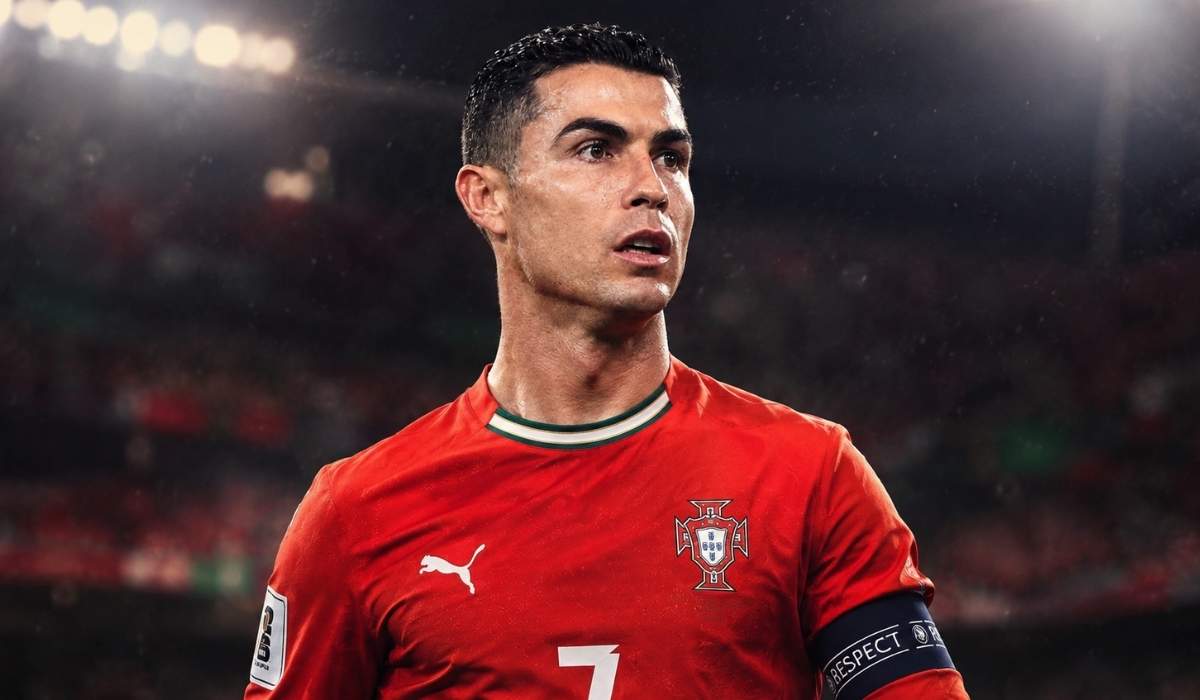
Cristiano Ronaldo’s relationship with the UEFA Champions League is unlike anything football has ever seen. Between the 2016/17 Champions League final and the 2017/18 quarterfinals, Ronaldo scored in every single match he played in the competition. That extraordinary run was not only a demonstration of consistency but also a reminder of why he became known as the king of Europe. During a period when the pressure was at its highest, the opponents were among the strongest in the world and every goal carried enormous importance, Ronaldo continued finding the net without interruption. He scored in finals, group-stage matches and knockout games, turning what should have been an almost impossible scoring sequence into another chapter of his remarkable Champions League story. The question is no longer whether Ronaldo was good in Europe. The real question is whether any player has ever appeared as unstoppable in the competition as he did during that period.
Ronaldo’s scoring run began with one of the most important matches of his career. In the 2017 Champions League final, Real Madrid faced Juventus, a team known for its defensive organisation and ability to limit even the best attackers. Juventus had reached the final after conceding very few goals throughout the tournament, and many supporters expected a tight contest. Ronaldo, however, scored twice as Real Madrid won 4–1 and became the first club in the Champions League era to retain the trophy. Those goals were not simply additions to his statistics. They came on the biggest club stage in football, against an elite defence and under the pressure of a final. Instead of being limited by the occasion, Ronaldo appeared to grow stronger because of it. The final became the starting point of a scoring streak that would continue into the following season and place him even further ahead in Champions League history.
When the 2017/18 campaign began, Ronaldo did not slow down. He scored in every group-stage game, becoming the first player to achieve that feat in a single Champions League season. Real Madrid’s group contained Borussia Dortmund, Tottenham Hotspur and APOEL, and Ronaldo found a way to score against all of them. He scored twice against APOEL in Madrid, twice against Dortmund in Germany, converted against Tottenham and continued adding goals in the return fixtures. The variety of opponents made the run even more impressive. Some defended deeply, others pressed aggressively and some attempted to match Real Madrid in open attacking football. None of those approaches stopped Ronaldo. He adapted to the space available, timed his movements and finished chances with a level of confidence that made every opportunity feel dangerous.
Why Ronaldo Was So Difficult to Stop
Ronaldo’s greatness during this period was not based on one ability. Defenders could not simply remove one part of his game and expect him to disappear. He could score with either foot, attack crosses with his head, finish from distance and convert penalties under pressure. His movement inside the penalty area was especially difficult to defend because he constantly changed his position. One moment he would stand near the centre-backs, and the next he would move toward the far post or drop into space before accelerating forward. Defenders often knew where he wanted to go but could not react quickly enough to stop him.
His transformation from a wide winger into an elite penalty-area scorer also played a major role. Earlier in his career, Ronaldo frequently collected the ball on the wing, dribbled past opponents and attempted long-range shots. As he became older, he adjusted his game. He reduced unnecessary touches, improved his positioning and focused on arriving in the areas where goals were most likely. This change made him even more effective in the Champions League. Knockout football often provides fewer opportunities because teams defend carefully and avoid taking risks. Ronaldo did not need ten chances to score. Sometimes he needed only one well-timed run or one moment when a defender lost concentration.
His physical condition was another major advantage. Ronaldo trained with extraordinary discipline, allowing him to remain explosive even after years at the highest level. His acceleration over short distances helped him escape markers, while his jumping ability made him a constant threat from crosses. Defenders could challenge him on the ground and still lose when the ball entered the air. This complete attacking skill set meant there was no obvious solution for stopping him.
The Mentality Behind the Scoring Run
Talent alone does not explain why Ronaldo scored in so many consecutive Champions League matches. His mentality was equally important. Ronaldo appeared to enjoy matches that carried the most pressure. While many players become more cautious in finals or knockout rounds, he often demanded the ball more frequently and took greater responsibility. He did not hide after missing a chance. Instead, he continued positioning himself for the next one.
This mentality was visible throughout the 2017/18 knockout stage. Real Madrid faced Paris Saint-Germain in the round of 16, and the tie was presented as a major test. PSG had assembled an attacking team containing Neymar, Kylian Mbappé and Edinson Cavani, while Ronaldo had faced criticism over his domestic form. Once again, the Champions League brought out his best. He scored twice in the first leg at the Santiago Bernabéu and added another goal in Paris. Real Madrid advanced comfortably, and Ronaldo’s scoring run continued.
The quarterfinal against Juventus produced one of the most iconic moments of his career. In Turin, Ronaldo scored twice, including an extraordinary overhead kick that caused even Juventus supporters to applaud. The goal was technically brilliant, but it also represented Ronaldo’s attitude. Few players would attempt such a difficult finish in a Champions League quarterfinal. Ronaldo not only attempted it—he executed it perfectly. That moment became a symbol of his confidence, athletic ability and desire to create history.
He scored again in the return leg from the penalty spot in stoppage time, sending Real Madrid through after Juventus had threatened a dramatic comeback. The pressure surrounding that penalty was enormous. A miss could have taken the match into extra time and completely changed the tie. Ronaldo remained calm and struck the ball into the top corner. The goal extended his scoring sequence and confirmed that pressure did not reduce his confidence.
Scoring in Every Type of Match
One reason the streak remains so memorable is that it covered different stages of the competition. Ronaldo was not simply collecting goals against weaker group-stage opponents. He scored in a final, every group match, both legs of a round-of-16 tie and both legs of a quarterfinal. Each stage created different tactical and emotional challenges.
Group-stage football requires consistency over several months. Teams travel across Europe, face different playing styles and often manage players around domestic schedules. Knockout football is more intense because one mistake can end the season. Finals are different again, with the entire football world focused on one match. Ronaldo scored in all of these environments.
His goals also came home and away. Some players perform better in familiar stadiums, but Ronaldo regularly produced major moments in hostile environments. He scored in Dortmund, Paris and Turin, showing that opposing crowds did not intimidate him. In fact, away matches sometimes seemed to increase his focus. Silencing a stadium became part of his competitive motivation.
Was This Ronaldo’s Greatest European Period?
Ronaldo enjoyed several extraordinary Champions League seasons, making it difficult to identify one period as his greatest. He scored a record number of goals during the 2013/14 campaign and helped Real Madrid win La Décima. He later delivered remarkable hat-tricks against Wolfsburg, Bayern Munich and Atlético Madrid. However, the scoring streak between the 2017 final and the 2018 quarterfinal may represent the clearest example of his consistency.
Scoring many goals across a season is impressive, but scoring in every match creates a different type of pressure. Once the run becomes visible, each new game carries an additional question: can he do it again? Ronaldo repeatedly answered yes. Opponents prepared specifically for him, analysts discussed his movements and defenders understood that stopping him was essential. Still, he scored.
The streak also occurred when Real Madrid were pursuing a third consecutive Champions League title. The team had already won the competition in 2016 and 2017, yet Ronaldo continued playing with the urgency of someone searching for a first trophy. That hunger helped separate him from many other great players. Previous success did not reduce his motivation. It appeared to increase his desire to create a record that might never be repeated.
Real Madrid’s Role in Ronaldo’s Success
Although Ronaldo was the main scorer, Real Madrid’s team structure gave him the platform to succeed. Players such as Luka Modrić, Toni Kroos, Marcelo, Isco and Dani Carvajal provided creativity and accurate delivery. Karim Benzema’s movement was also essential because he frequently created space for Ronaldo by pulling defenders away from central areas.
Zinedine Zidane understood how to build the attack around Ronaldo’s strengths. He managed the player’s minutes in domestic matches and attempted to keep him fresh for the most important Champions League games. This approach became especially valuable as Ronaldo entered his thirties. Instead of asking him to perform every action across the pitch, Real Madrid focused his energy on decisive attacking moments.
The team’s confidence also supported Ronaldo. Real Madrid had developed an extraordinary belief that they could survive difficult situations in Europe. Even when they fell behind, the players rarely appeared defeated. Ronaldo embodied that mentality. His teammates expected him to score, supporters believed a goal could arrive at any moment and opponents felt pressure whenever he entered the penalty area.
Why the Champions League Suited Ronaldo
The Champions League suited Ronaldo because it rewarded the qualities he valued most: ambition, confidence and decisive performance. The tournament brings together elite clubs, famous stadiums and worldwide attention. Ronaldo appeared motivated by the opportunity to prove himself against the strongest opponents.
He also understood the importance of memorable moments. League competitions reward consistency over many months, but Champions League history often remembers individual nights. A hat-trick in a comeback, a late penalty or an overhead kick can define a player’s legacy. Ronaldo repeatedly produced those moments.
His celebration, body language and emotional reactions also matched the drama of the tournament. He treated goals as significant events, especially in knockout matches. This intensity connected with Real Madrid supporters and created an image of a player built specifically for European competition.
Could Anyone Repeat the Record?
Repeating Ronaldo’s streak would be extremely difficult. Modern forwards may score more frequently because of attacking systems and expanded competitions, but maintaining a scoring run through so many consecutive Champions League matches requires talent, fitness, opportunity and team success. A player must avoid injury, remain on the field, receive enough chances and help his team progress deep into the competition.
The opponent also matters. A striker could score throughout the group stage but then face a highly organised defence in the knockout rounds. One quiet match ends the sequence. Ronaldo avoided that outcome across a long period.
Players such as Lionel Messi, Robert Lewandowski, Erling Haaland and Kylian Mbappé have produced outstanding Champions League scoring records. However, Ronaldo’s combination of longevity, knockout performances and consecutive scoring remains unique. Future stars may challenge his totals, but matching the exact way he dominated the tournament will be difficult.
Did Ronaldo Depend Only on Goals?
Ronaldo’s scoring statistics naturally dominate discussions, but his influence extended beyond goals. Defenders often changed their positioning because of him. Full-backs hesitated to move forward, centre-backs remained deeper and midfielders dropped closer to their own goal. This created space for other Real Madrid players.
Even when Ronaldo was not directly involved in a move, opponents had to consider his position. A cross toward the far post became dangerous because of his jumping ability. A quick transition became threatening because he could attack space. His presence affected the entire defensive structure.
However, goals remain the clearest measure of his European impact. Football matches are decided by scoring, and Ronaldo delivered when Real Madrid needed him most. He did not simply influence defenders—he punished them.
The End of the Scoring Streak
Every scoring run eventually ends, and Ronaldo’s sequence stopped in the 2017/18 semifinals against Bayern Munich. He did not score in either leg, although Real Madrid advanced to the final. The end of the streak did not reduce its significance. By that stage, Ronaldo had scored across a remarkable series of matches and helped place Real Madrid within reach of another European title.
Real Madrid went on to defeat Liverpool in the final and win a third consecutive Champions League trophy. Ronaldo did not score in that match, but his earlier goals had been essential to reaching it. Without his performances against PSG and Juventus, Real Madrid might never have had the opportunity to complete the historic three-peat.
The fact that his streak ended before the trophy was lifted also demonstrates that football remains a team game. Ronaldo carried much of the scoring responsibility, but other players stepped forward when he had quieter matches. That balance was one reason Real Madrid became so successful.
Ronaldo’s Champions League Legacy
Ronaldo’s Champions League legacy includes far more than one scoring streak. He became the competition’s leading scorer, won multiple titles and delivered some of its most famous performances. His name became so closely connected to the tournament that many supporters referred to it as “his competition.”
The sequence from the 2017 final to the 2018 quarterfinal supports that reputation. It shows Ronaldo at his most consistent and decisive. He was not relying on one extraordinary evening. He was producing match after match, opponent after opponent and stage after stage.
Young players may eventually score more goals in a single campaign or challenge his overall records. However, Ronaldo’s ability to dominate the competition across different clubs, seasons and phases will remain difficult to match.
Was Ronaldo Truly Unstoppable?
The word “unstoppable” is often exaggerated in football. Every player can be defended, every scorer can experience a quiet match and every team can lose. However, during this particular Champions League run, Ronaldo came remarkably close to justifying the description.
Opponents knew he was the main threat. Coaches prepared plans to limit him. Defenders marked him closely and goalkeepers studied his finishing. None of it prevented him from scoring across the sequence.
He scored through movement, headers, penalties, close-range finishes and one of the greatest overhead kicks in Champions League history. When one route to goal was removed, he found another.
That adaptability is what made him appear unstoppable. It was not that defenders made no effort. It was that their efforts repeatedly failed.
Final Verdict
Cristiano Ronaldo’s scoring run from the 2016/17 Champions League final to the 2017/18 quarterfinals remains one of the most extraordinary achievements in European football. Scoring in every match across such a demanding sequence required elite technique, physical conditioning, confidence and an unmatched hunger for decisive moments.
He scored against different teams, in different countries and at every major stage of the tournament. He punished Juventus in a final, dominated the following group stage, eliminated Paris Saint-Germain and produced an iconic performance in Turin.
The run confirmed everything supporters already believed about Ronaldo. He was built for pressure, motivated by history and capable of turning the Champions League into his personal stage.
Was Ronaldo unstoppable in the UCL?
During that period, the answer is almost impossible to deny. Defenders could slow him down, challenge him and attempt to remove his space, but match after match, Ronaldo still found the net.
That is why his Champions League legacy remains so powerful. He did not simply participate in the tournament’s greatest nights.
He created them.